2027: APC Chieftain Says ADC Coalition Lacks Unity and Structure to Challenge Tinubu

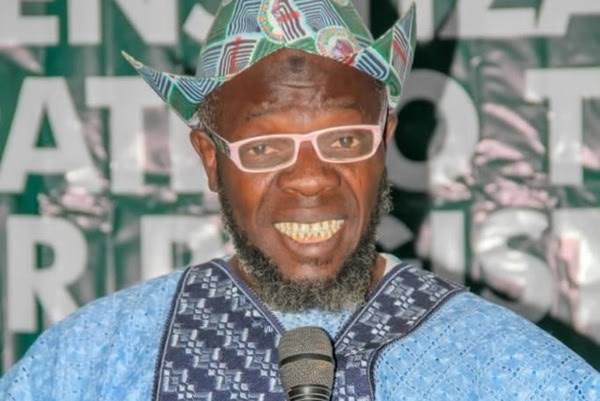
Abdulhakeem Adegoke Alawuje, a senior figure in the All Progressives Congress (APC), has described the activities of the African Democratic Congress (ADC) as driven more by personal ambitions and unresolved grievances than a coherent plan to govern Nigeria.
In a statement on Wednesday, Alawuje argued that the ADC coalition lacks the organizational structure, unity, and credibility necessary to mount a serious challenge against President Bola Ahmed Tinubu in the 2027 general election. He suggested that the coalition’s main aim is political positioning and relevance for future contests rather than a genuine effort to defeat the APC.
“What is being presented as a coalition is essentially an aggregation of political frustrations and unfulfilled ambitions,” Alawuje said. “Nigerians are politically aware and will not forget the records and legacies of those attempting to rebrand under a new platform.”
Alawuje pointed out that the ADC’s support largely comes from dissatisfied elements of the Peoples Democratic Party (PDP), Labour Party (LP), the defunct ANPP, and other political groupings, noting that their alliance is founded more on shared grievances than a unified ideology or national vision.
He also highlighted what he described as conflicting personal ambitions within the coalition, citing figures such as former Vice President Atiku Abubakar, Nasir El-Rufai, Rotimi Amaechi, and Rauf Aregbesola, who appear primarily focused on unseating President Tinubu rather than promoting a coherent agenda. “Coalitions lacking a shared purpose, ideology, and vision rarely succeed, and are unlikely to govern effectively,” he said.
Alawuje further criticized the coalition for persistently criticizing President Tinubu’s policies without offering practical alternatives. “Criticism without solutions is not constructive opposition—it is mere noise,” he said, adding that leadership demands the courage to propose actionable policies rather than only attacking reforms.
Defending the Tinubu administration, he noted that the president’s reforms aim to correct structural inefficiencies in Nigeria’s economy and governance. While acknowledging that some measures may require short-term sacrifices, Alawuje emphasized that these steps are intended to ensure long-term stability and institutional renewal.
He cautioned against using political coalitions as tools to settle scores from past elections in 2015, 2019, and 2023, stressing that democracy should not be reduced to a platform for personal vendettas.
“Nigeria deserves a credible, responsible, and policy-driven opposition. Agitations without clear objectives, criticisms without solutions, and coalitions without direction will not inspire confidence or public trust,” he said.
Alawuje concluded by affirming that President Tinubu remains a seasoned democratic leader whose experience, strategic approach, and reform agenda continue to command respect both nationally and internationally.